
Seasonal Flower Guide: What to Buy Month by Month
A month-by-month guide to seasonal flowers, from February mimosa to September dahlias, with practical tips on what to buy, what to ask and why timing matters.
The first mimosa of the year usually arrives at the market in late February, and it announces itself before you see it: a warm, powdery scent near the entrance, branches wrapped in newspaper. Three weeks later the mimosa is gone and the tulips have taken over. That rhythm — short, predictable, worth waiting for — is what buying in season is actually about. It is not a rule invented to make shopping harder. It is simply how flowers grow, and once you know the calendar, your arrangements improve, your stems last longer, and you stop spending money on flowers that were never going to open properly in the first place.
Why Buying in Season Matters
Flowers cut at the right moment in the right climate are stronger. They travel shorter distances, they are handled less, and they reach your vase with more of their life still ahead of them. A garden peony in May will often outlast a hothouse rose in any month of the year. Scent is the other giveaway: the stems that actually smell of something tend to be the ones that bloomed where and when they were supposed to.
There is a practical side too. Seasonal flowers are usually cheaper, because growers have more than they can hold and the market is full of them. They are also easier to plan with. If you know that late September means dahlias, asters and grasses, you can design a table around them months ahead instead of hoping for the best the week before.
What season does not mean: a strict list of permitted flowers, or a reason to feel guilty about a imported stem when you need one. A Mediterranean garden, an alpine valley and a northern city are all on different schedules, and a cool spring can push everything back by a fortnight. Treat the calendar as a map, not a law.
Questions worth asking at any flower counter:
- What came in from a local grower this week?
- Which of these will still look good in five days?
- What is about to finish for the year?
- What would you take home yourself today?
Late Winter: January and February
This is the quietest stretch of the flower year, and the most underestimated. Light is low, days are short, and the stems that do arrive are often the most fragrant of all.
In January, look for forced bulbs — hyacinths, amaryllis, paperwhite narcissus — alongside tulips from protected cultivation, ranunculus and anemones from mild coastal areas, and hellebores if you have a grower nearby. Flowering branches are the great January material: quince, forsythia, almond and plum, cut tight and brought indoors to open slowly over a week or two. Foliage does a lot of the work now. Eucalyptus, pistache, ruscus and ivy hold a winter arrangement together when blooms are scarce and expensive.
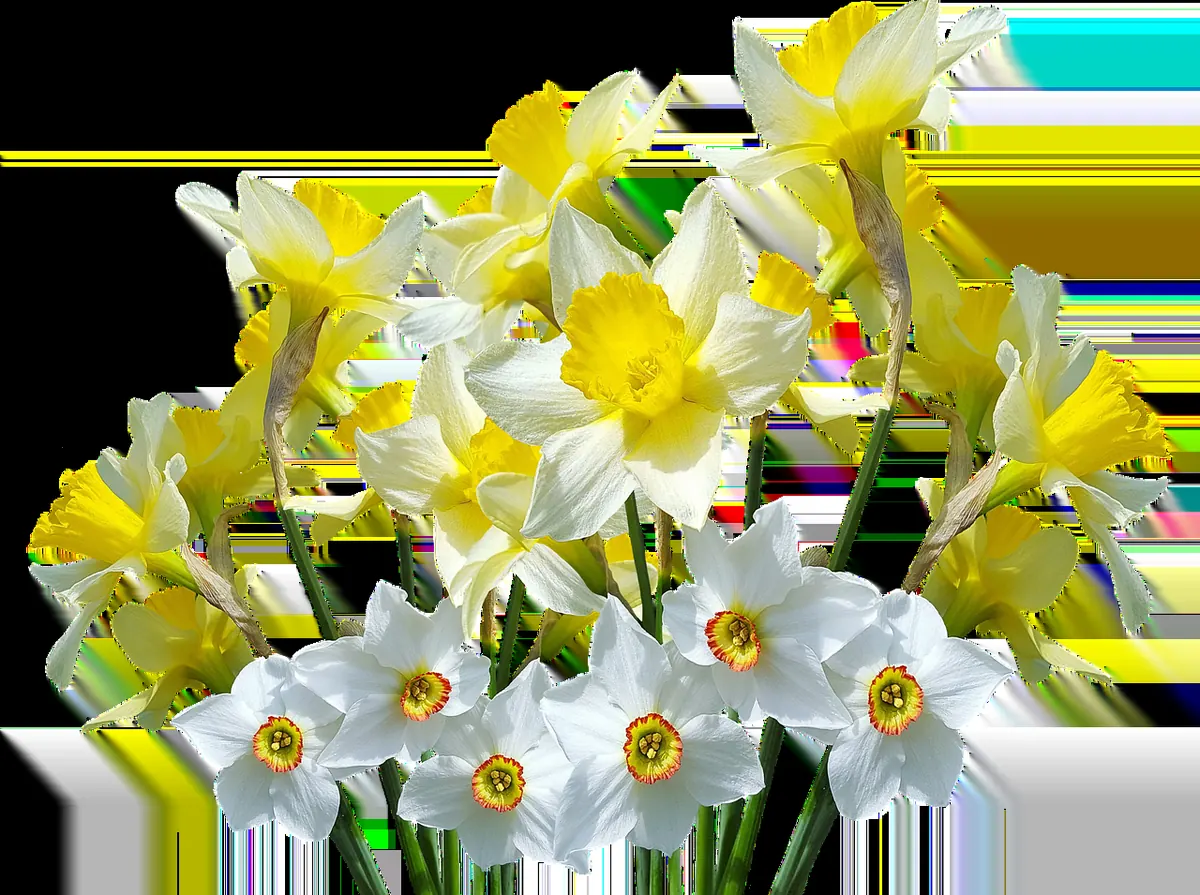
February brings the mimosa, along with daffodils, freesia, more ranunculus and anemones, and lilac towards the end of the month in warm years. Buy mimosa branches with a mixture of tight buds and open puffs; the buds will keep opening at home. Handle them gently, because the foliage bruises, and keep them away from pale linen — the pollen drops.
Spring: March, April and May
Spring moves faster than any other season. Things change weekly, and a flower you loved in March may be finished before you get round to ordering it again.
March
Mimosa peaks in the first days of the month, which is why it belongs to early March celebrations in Italy. Alongside it: tulips, daffodils, freesia, ranunculus, anemones, muscari, hyacinths, and stock, whose clove scent fills a whole room from three stems. Cherry and plum branches start appearing, tight and elegant.
April
Tulips in force, ranunculus at their best, iris, stock, lilac, the first sweet peas, and — in milder areas — the very first peonies at the end of the month. Lily of the valley turns up briefly and is worth buying in a small bunch even if it lasts only a few days.
May
Peony month. Buy them at the soft-ball stage, when they give slightly under your thumb; they will open in the vase over two or three days. If they arrive hard as marbles, stand them in shallow warm water in a warm room. If they are already wide open, buy them for today, not for the weekend. May also brings the first roses, sweet peas, alliums, columbines, cornflowers, nigella and scabiosa.
Two habits pay off in spring. Cut tulip stems short and use a vase that holds them firmly, because tulips keep growing in water and will otherwise flop. And condition daffodils separately: their sap damages other stems, so give them a few hours in their own water before mixing.
Summer: June, July and August
June is the sweet spot of the whole year. Roses at their first flush, sweet peas, campanula, delphinium, scabiosa, nigella, cornflower, dianthus, the first lavender, and the last of the peonies.
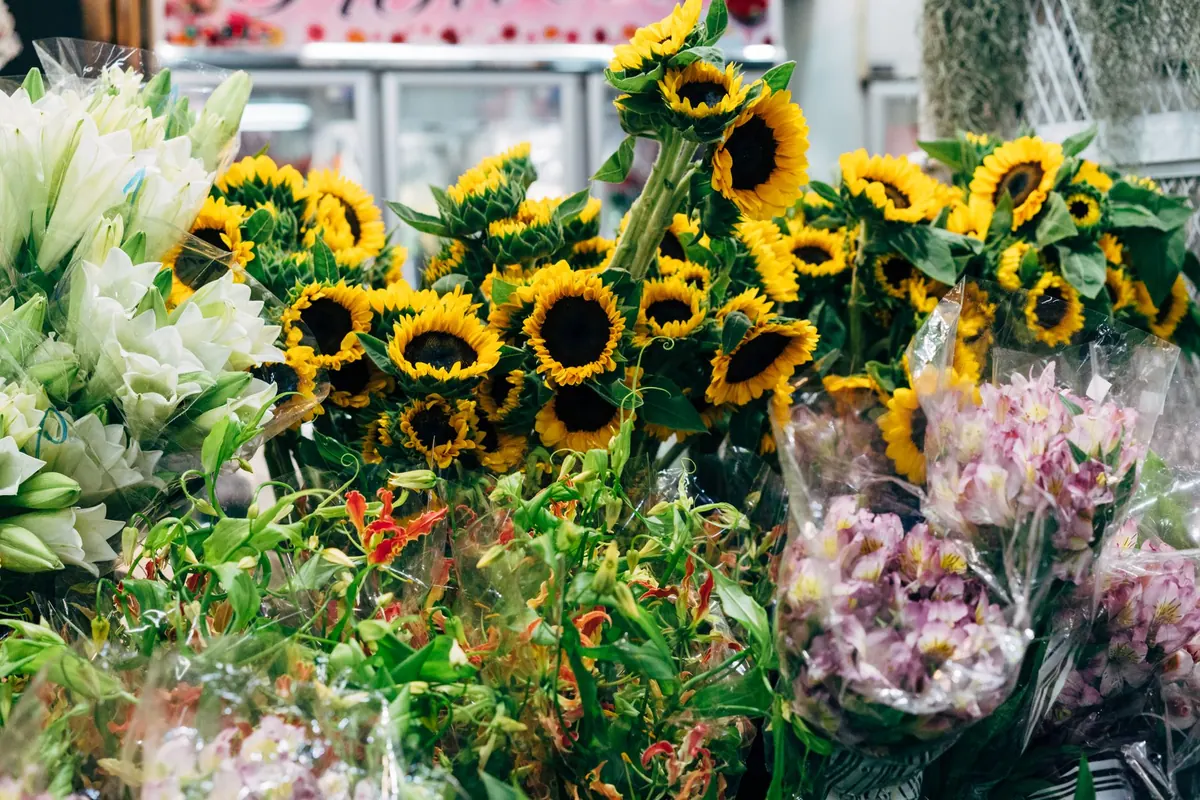
July changes everything. Heat speeds up opening and shortens vase life, so buy tighter buds than you would in spring. Sunflowers, lavender, the first dahlias, zinnias, cosmos, gladiolus, lilies and gomphrena take over. Cut flowers early in the morning if you grow your own, and get them into water within minutes rather than leaving a basket in the sun.
August is dahlia and zinnia country, with cosmos, celosia, amaranthus and fading hydrangeas turning green and blush. In high summer, cleaning matters more than anything else you do: bigger vases, cool water, a fresh cut at an angle every couple of days, and a position away from direct sun and away from the fruit bowl, since ripening fruit releases ethylene that ages flowers quickly.
Autumn: September, October and November
September belongs to dahlias. The plants have had a whole summer to build, and the blooms are the largest and most saturated of the year. Asters begin, roses give a second flush, and the grasses arrive — miscanthus, pennisetum, crocosmia seed heads — which change the whole mood of an arrangement.
October is the month of texture. Dahlias fade with the first cold nights, while asters, garden chrysanthemums, sedum, berries (rosehips, hypericum, skimmia, viburnum) and papery hydrangeas take their place. Hydrangeas picked now, with stems left in an inch of water, dry well and will carry you into winter.
November narrows again: chrysanthemums, berries, ilex, eucalyptus, seed pods, grasses, dried elements, and the first hellebores in mild areas. It is also the month of preparation. Amaryllis and hyacinth bulbs go into forcing now for December flowers, and if you grow anything yourself, this is when spring is quietly decided.
December: Forced Bulbs and Evergreen
December is not an empty month; it is simply a different one. Amaryllis, hyacinths and paperwhite narcissus carry the colour, with cyclamen, hellebores and berry-laden ilex or skimmia beside them. Spruce, pine, cedar, magnolia leaves and bare branches provide the structure, and a few stems of eucalyptus give that grey-green softness nothing else quite matches. Poinsettia is everywhere in December and is a fine plant, but it is a poor cut flower — treat it as a decoration in its own pot, not as material for a vase.
Building a Seasonal Habit
You do not need to memorise all of this. You need a system that remembers it for you.
- Keep a note on your phone. One line per market visit: the date, what you bought, how long it lasted. Six months of these notes is more useful than any guide.
- Ask what is local this week, every time. Florists and growers enjoy the question, and the answer is usually better than whatever is displayed at the front.
- Test before you commit. Buy a single bunch of anything unfamiliar and live with it for a few days before designing a whole arrangement around it.
- Condition properly. Strip the lower leaves, cut at an angle, use a clean vase and fresh water, and keep the water topped up rather than refreshed in a panic.
- Plan events two seasons ahead. If a wedding or a dinner falls in September, start thinking about dahlias and grasses in June.
Expect the calendar to shift by two or three weeks either way depending on where you are and what kind of year it has been. A good grower or florist will always beat a chart — but knowing roughly what should be good this month means you can ask the right question, and recognise the right answer when you hear it.
Photo: Markus Winkler / Pexels