

Common Houseplant Watering Mistakes and How to Fix Them
Most houseplants suffer from watering habits rather than neglect. A practical guide to spotting overwatering, underwatering and drainage problems, and fixing them before the roots do.
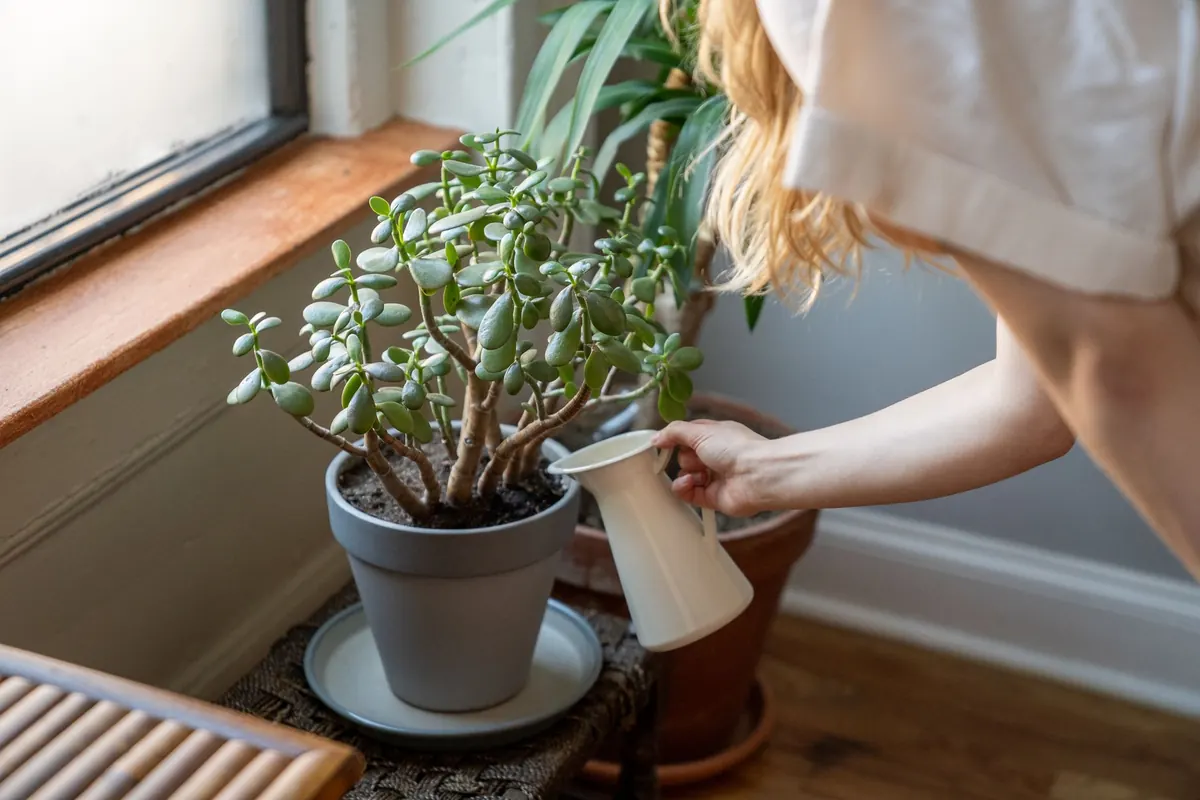
Most houseplants don't die of neglect. They die of good intentions — a generous splash every Sunday, a decorative pot with no hole in the bottom, a saucer that never gets emptied. Watering is the one chore nearly every plant owner performs regularly, which is exactly why so many problems begin there.
The encouraging part is that watering mistakes leave clues early. A yellowing lower leaf, a pot that feels heavier than it should, soil that has shrunk away from the sides. Learn to read those clues and you can usually correct course long before a plant is past saving. What follows are the mistakes that come up most often, and the fixes that genuinely work.
Overwatering Is Rarely About One Big Splash
It's the pattern that causes damage, not the volume. A plant sitting in soil that stays damp for a week or more is slowly being suffocated: roots need air pockets between the particles of potting mix, and constant saturation collapses them. Rot moves in, and by the time the leaves tell you, the roots are already compromised.
The usual signs: yellowing leaves low down on the stem, soft or blackened stems near the soil line, a surface that grows a little green fuzz, tiny fungus gnats circling the pot, and a sour smell when you lean close. A plant that droops while the soil is still wet is not thirsty — it's a plant whose roots can no longer take up water.
What to do if you suspect root rot
- Stop watering and move the pot somewhere bright and airy, out of direct harsh sun.
- Slide the plant out of its pot and look at the roots. Firm, pale roots are healthy; brown, mushy ones that come away in your fingers are not. Trim the bad sections with clean scissors.
- Repot into fresh, open mix — add perlite or orchid bark if your mix is dense — and choose a pot only a couple of centimetres wider than the root ball, with drainage holes.
- Water sparingly for the next two or three weeks and let the mix dry down more than you normally would while the plant recovers.
Going forward, the rule of thumb for most tropical houseplants is simple: water when the top two or three centimetres of mix feel dry to the touch. Succulents, snake plants and ZZ plants want to dry out almost completely between drinks. Ferns and calatheas prefer the surface to stay barely moist. The plant tells you which camp it's in.
The Finger Test Beats Any Watering Schedule
Watering "every Sunday" is the second most common mistake. A plant on a bright windowsill in June dries out far faster than the same plant in a dim corner in December. Pot size, potting mix, airflow, central heating and the age of the soil all change the pace. A calendar can't account for any of that, but your hand can.
Push a finger into the mix up to the second knuckle. If it comes out clean and dry, water. If soil clings to it, wait. For larger pots, lift the whole thing — a freshly watered pot is noticeably heavy, and a dry one feels light and hollow. A plain bamboo skewer left in the soil for ten minutes works the same way as a cake tester, and moisture meters are fine as a rough guide but tend to drift over time.
- Water when: the top layer is dry, the pot feels light, and the leaves have lost their spring.
- Wait when: the mix is still cool and damp, the pot is heavy, or condensation forms on the inside of a cachepot.
- Investigate when: the plant droops while the soil is wet, or the surface smells sour — that's usually a drainage or rot problem, not thirst.
Underwatering: When the Soil Pulls Away From the Pot
Too little water is gentler than too much, but it still shows. Leaves crisp at the tips first, then along the edges. The whole plant wilts and then perks up within a few hours of watering. The pot becomes startlingly light. And the mix itself shrinks away from the sides, leaving a gap where water can run straight down the inside wall and out of the drainage hole without ever soaking the root ball.
When that happens, topping up from the watering can won't fix it. Set the pot in a basin of room-temperature water so it comes about halfway up the sides, and leave it for twenty to thirty minutes, until the surface of the mix feels damp. Then let it drain properly. A plant that has been bone dry for weeks may need this treatment twice in a row.
Also resist the habit of small frequent sips. Light watering only wets the top layer, which encourages shallow roots and leaves the lower roots dry. When you do water, water thoroughly and then leave the plant alone.
Drainage, Cachepots and the Soggy Bottom Problem
Plenty of plants are lost simply because water had nowhere to go. The classic setup — a plastic nursery pot dropped inside a decorative cachepot — is fine until someone pours a litre through and forgets to tip out what collects underneath. The bottom half of the root ball then sits in standing water for days.
Other traps worth checking: saucers left full after watering, a pot with a single small hole that blocks with grit, a pot far larger than the root system so the extra soil holds water the roots never reach, and a layer of pebbles in the base of a hole-less pot, which does not improve drainage — it simply raises the water table closer to the roots.
Empty saucers and cachepots fifteen minutes after watering. If a pot has no drainage hole at all, either use it as a cover for a plastic pot or drill a hole. And when repotting, choose a mix with something chunky in it; ordinary garden soil in a living room pot is a recipe for compaction.
How You Water Matters Too
Top watering, done properly
Pour slowly around the rim rather than in one spot near the stem, pause to let it soak in, then repeat until water runs out of the bottom. That flush pushes stale salts out of the mix. Empty the saucer afterwards rather than letting the pot reabsorb it.
Bottom watering
Standing a pot in a tray of water for twenty minutes works well for African violets and other plants that dislike wet foliage, and for reviving dried-out mix. Don't rely on it exclusively, though — salts can build up in the upper layer over time, so flush the pot from the top every few months.
Temperature and water quality
Cold tap water straight onto tropical roots is a small shock worth avoiding; room temperature is kinder. Letting water stand overnight can dissipate some chlorine, but not chloramine or fluoride, which are the usual culprits behind brown leaf tips on dracaenas, spider plants and calatheas. If those are the plants you keep, filtered or rainwater is a safer choice. And misting is not a substitute for watering — it barely shifts humidity, and wet leaves in a cool, still room invite fungal problems.
A Five-Minute Weekly Check That Prevents Most Problems
Once a week, walk the room and handle every pot. Lift it, feel the surface, look at the leaves and empty whatever has collected in the saucer. Adjust: more water for the plant in the brightest spot, less for the one in the shaded corner, and noticeably less across the board from October to March, when light drops and growth slows. It takes minutes, and it will catch almost every watering problem while it is still a small one.
Plants are forgiving of a missed week far more than they are of a pot that never dries out. Get the drainage right, check the soil before you pour, and water properly when you do — the rest is mostly patience.
Photo: Kevin Malik / Pexels